
McIntosh County Marriage Licenses
A marriage license in McIntosh County comes from one office. The McIntosh County Court Clerk, Lisa Rodebush, issues it. Couples apply in person before the clerk, and the clerk issues the license and certificate once satisfied there is no legal bar to the marriage. The license is good in any Oklahoma county. The completed certificate should return to the issuing clerk after the ceremony.
The office sits inside the courthouse in downtown Eufaula. Staff handle the application, the fee, and the finished certificate at the same counter.
McIntosh County Court Clerk
Lisa Rodebush
110 N First St
Eufaula, OK 74432
918-689-2282
Mon-Fri 8:00 a.m. to 4:00 p.m.
The Court Clerk also files the divorce and domestic cases for the District Court, so one office covers both ends of a marriage in McIntosh County.
How to Apply for a Marriage License
The license process is built around an in-person visit. Both applicants go before the Court Clerk together, since each one signs. A little preparation keeps the trip short.
- Both applicants go in person to the Court Clerk at 110 N First St in Eufaula.
- Bring a government-issued photo ID for each applicant.
- Give your full legal names, dates of birth, and prior-marriage details so the clerk can confirm there is no legal impediment.
- Pay the license fee, or ask about the reduced fee for qualified premarital counseling.
- Receive the license and certificate, then return the completed certificate to the Court Clerk after the ceremony.
Oklahoma backs this process by statute. Applicants apply through the court clerk under 43 O.S. 5, and the completed certificate returns to that clerk.
Marriage License Application Fields
The clerk needs enough information to confirm both applicants can marry. The exact form belongs to the Court Clerk, so the items below describe the kind of detail an Oklahoma marriage application calls for rather than a fixed county form.
| Field | Required | Notes |
|---|---|---|
| Full legal name | Yes | For both applicants, as shown on a government ID |
| Date of birth | Yes | Establishes age and eligibility to marry |
| Photo identification | Yes | A current government-issued photo ID for each applicant |
| Prior marriage status | Yes | How any past marriage ended, by death or divorce |
Confirm the exact requirements with the Court Clerk before the visit, because the office sets the current details and any extra documents.
Look Up McIntosh County Marriage Records
There are two main ways to find a McIntosh County marriage record. For a recent license, the court system carries the case. ODCR lists Marriage License as a searchable case type, so you select McIntosh as the court and search by a party name. The Court Clerk can then provide a certified copy of the marriage record on file.
The basic ODCR search is free. If a name brings up nothing, the record may predate the online index, or the license may have been issued in another county. The license is valid statewide, so a couple from McIntosh County could have applied elsewhere. When the online search comes up short, the Court Clerk can check the file directly.
For older marriages, the Oklahoma Historical Society keeps a historical marriage index that you can search on its marriage records search page.
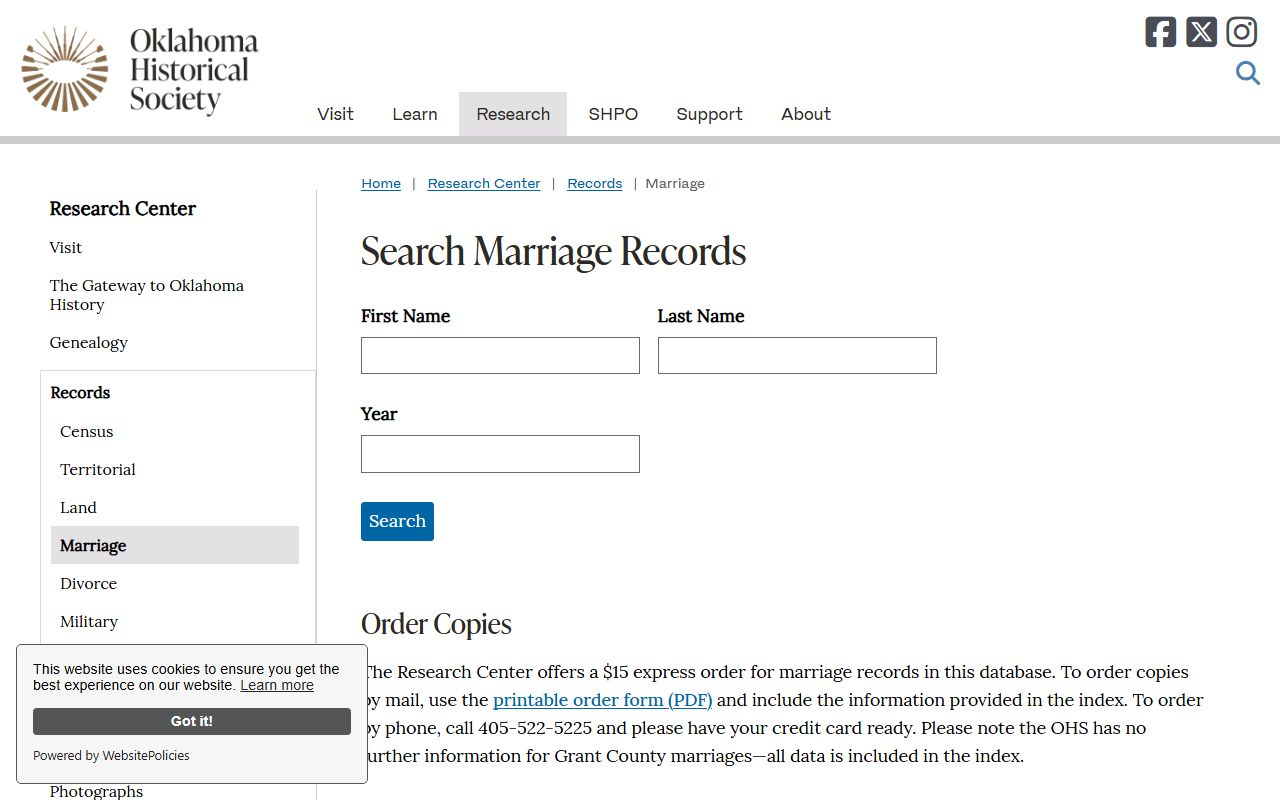
The index searches by first name, last name, and year, and the Historical Society notes a $15 express order for copies. It is a genealogy and history tool, not the current certified source.
Note: The historical marriage index is not a substitute for a certified county copy, so a McIntosh County marriage record needed for legal proof should come from the Court Clerk.
McIntosh County Marriage and Divorce Fees
Oklahoma sets a statewide marriage-license fee structure that its court clerks follow. The standard license fee is $50, and it drops to $5 when the couple completes qualified premarital counseling. The reduced fee rests on 43 O.S. 5.1 and 28 O.S. 31.
| Item | Amount |
|---|---|
| Marriage license | $50, statewide-backed |
| Marriage license with qualified premarital counseling | $5 |
| Certified marriage copy | Confirm with the Court Clerk |
| Divorce filing | Confirm with the Court Clerk |
| Certified divorce decree copy | Confirm with the Court Clerk |
Note: McIntosh County's own pages did not publish a marriage-license fee table, so confirm the current local amount and accepted payment methods with the Court Clerk before applying.
Finding McIntosh County Divorce Records
Divorce records are District Court domestic and family records, kept by the McIntosh County Court Clerk in the county where the case was filed. ODCR groups them under Family and Domestic Proceedings, plus related miscellaneous categories. You search the same way as any other case, by party name or by case number, and the family prefix is FD. Residency and venue follow 43 O.S. 102, which is why a McIntosh County divorce is usually filed and kept here.
A divorce file holds more than the final order. Most cases carry these parts:
- The petition that opens the case.
- The summons and proof of service on the other spouse.
- Temporary orders entered while the case is open.
- Custody and support filings when children are involved.
- The final decree that ends the marriage.
- Docket entries and financial or cost records.
The docket is public, but the file is not wide open. Details that touch children, financial accounts, or sealed exhibits may be redacted.
Older McIntosh County records can have gaps. The old courthouse burned in July 1925, and many county records were lost. The current courthouse dates to 1927. A pre-fire marriage or divorce record may be incomplete locally, so a researcher may have to lean on archived indexes or the Oklahoma Historical Society for material from that era.
Filing for Divorce in McIntosh County
A divorce starts with a filing at the Court Clerk's counter. Before that, confirm residency and venue under Oklahoma law, since the case belongs in McIntosh County only when the venue fits. The petitioner then prepares the petition and the required domestic forms.
From there the path runs through service and hearings. File the petition with the McIntosh County Court Clerk, pay the filing fee or request a waiver if eligible, and serve the respondent. Temporary-order, mediation, or status hearings may follow if the judge orders them. Once custody, property, and support are resolved, the court enters the final decree. McIntosh County did not publish a set divorce filing fee, so confirm the current amount with the Court Clerk.
Privacy in McIntosh County Domestic Cases
Family cases sit in a sensitive zone. Much of a McIntosh County divorce docket is public, yet parts of the file carry private information that the court holds back. Records about minor children are guarded. So are financial account numbers, Social Security numbers, and certain addresses. Protective-order details and sealed exhibits can be restricted as well.
Open records law does not override a statute that makes a specific record confidential. A sealed portion of a domestic case can stay closed even when the rest of the docket is visible. To view a restricted part, a person may need party status, an attorney's authority, or a court order.
Note: A sealed or redacted portion of a McIntosh County domestic case can stay closed by statute, so a party may need a court order to view the protected material.
Getting Certified McIntosh County Copies
A certified copy is the version courts and agencies accept as proof. Names on a deed, a passport application, a benefits claim, or a new marriage license often need one. For a McIntosh County marriage certificate or a divorce decree, the certified copy comes from the Court Clerk where the record was filed.
The Oklahoma Historical Society points the same direction on its records guidance page.
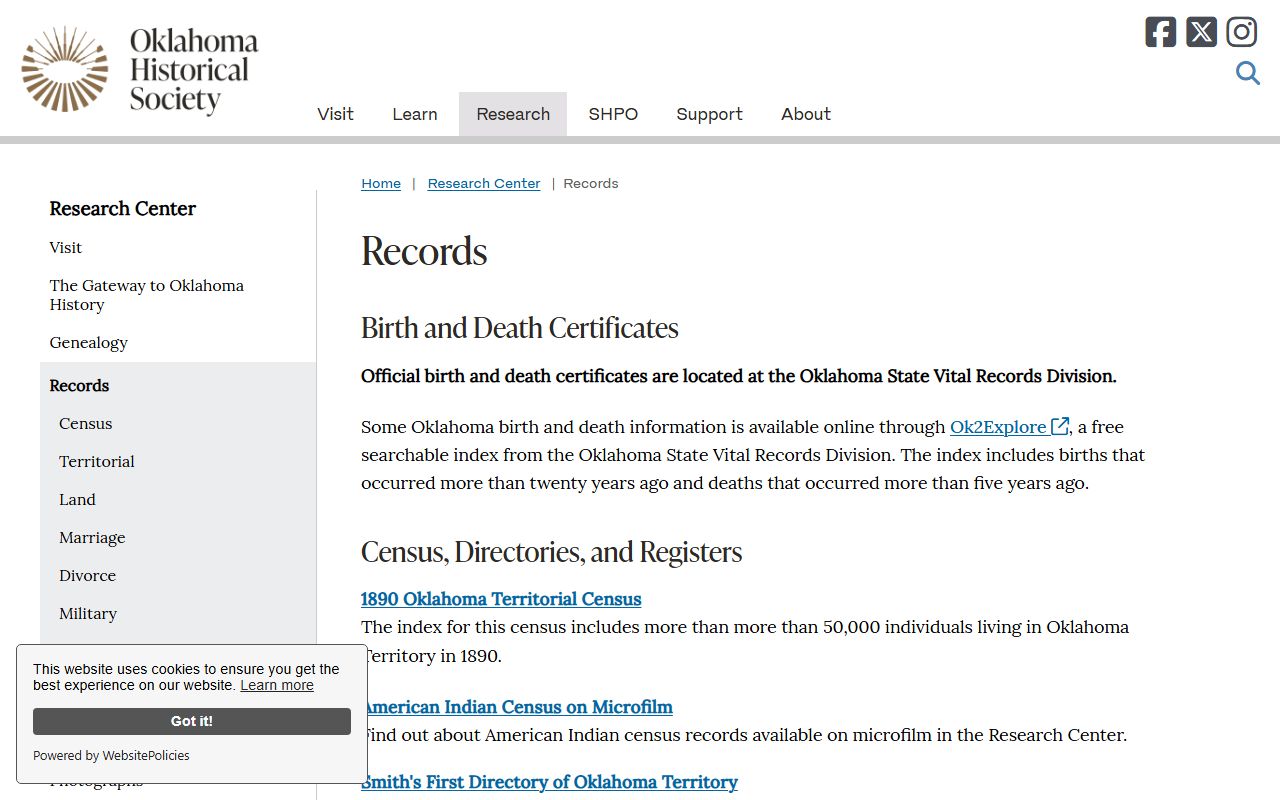
Its guidance states that official marriage certificates and divorce records are obtained from the county court clerk where the marriage or divorce was filed. To order, contact the McIntosh County Court Clerk with the names and an approximate date, and ask about the certified-copy fee and turnaround.
McIntosh County and State Vital Records
One split trips up a lot of searches. Not every vital record comes from the same office. Birth and death certificates in Oklahoma come from the State Department of Health. Marriage and divorce records come from the county court clerk where the case was filed, which for a McIntosh County marriage or divorce is the Court Clerk in Eufaula.
Oklahoma's Vital Statistics office spells out that division on its vital statistics page.
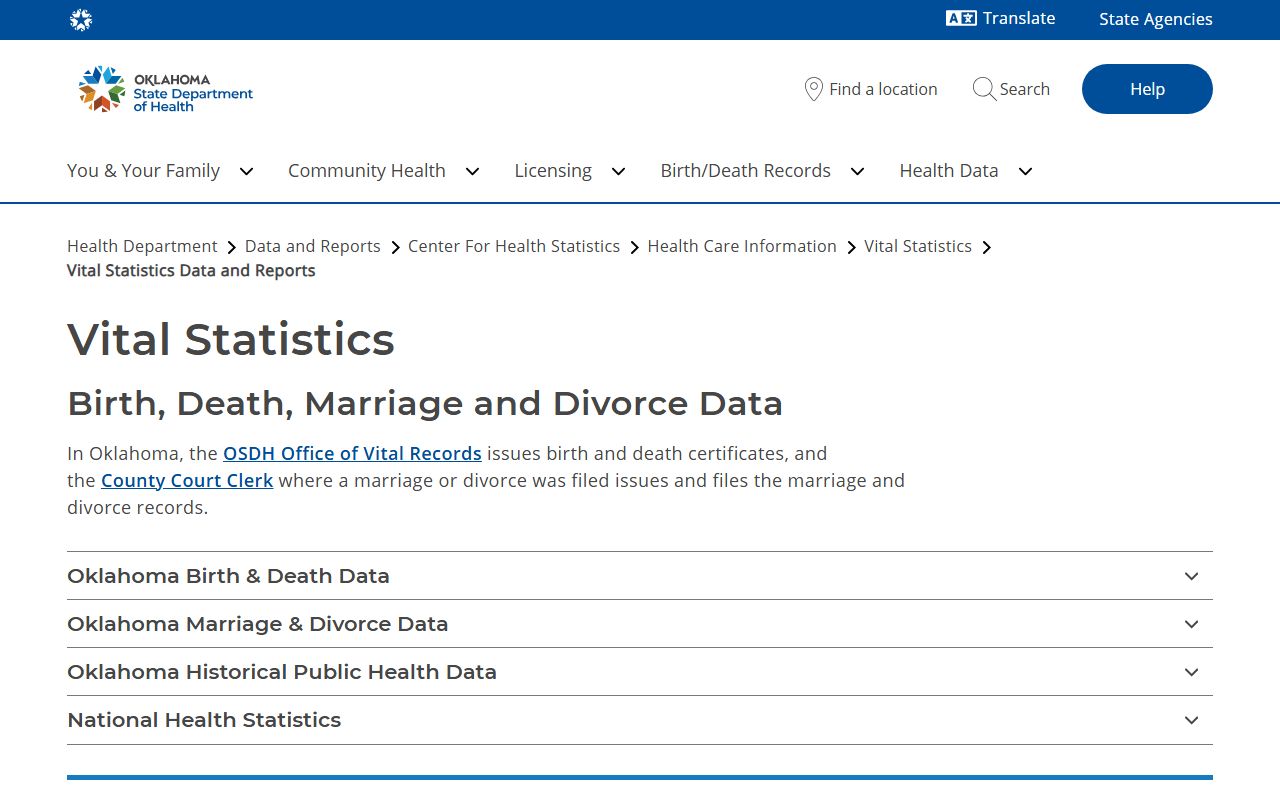
So for a birth or death record, go to the state health office. For a marriage license or a divorce decree in McIntosh County, the Court Clerk holds the file. A broader case lookup across the county runs through the McIntosh County court records portals.